ZERO was becoming harder to evolve.
Engineering was losing too much time building screens from scratch. Similar patterns kept being redesigned and rebuilt: list items, actions, information lists, success screens. Every new flow created more custom work, more QA, more maintenance, and more room for inconsistency.
At the same time, ZERO had not evolved at the same pace as the NGRAVE brand, the website, or LIQUID. It was still the main product, but it no longer felt like the most polished part of the ecosystem.
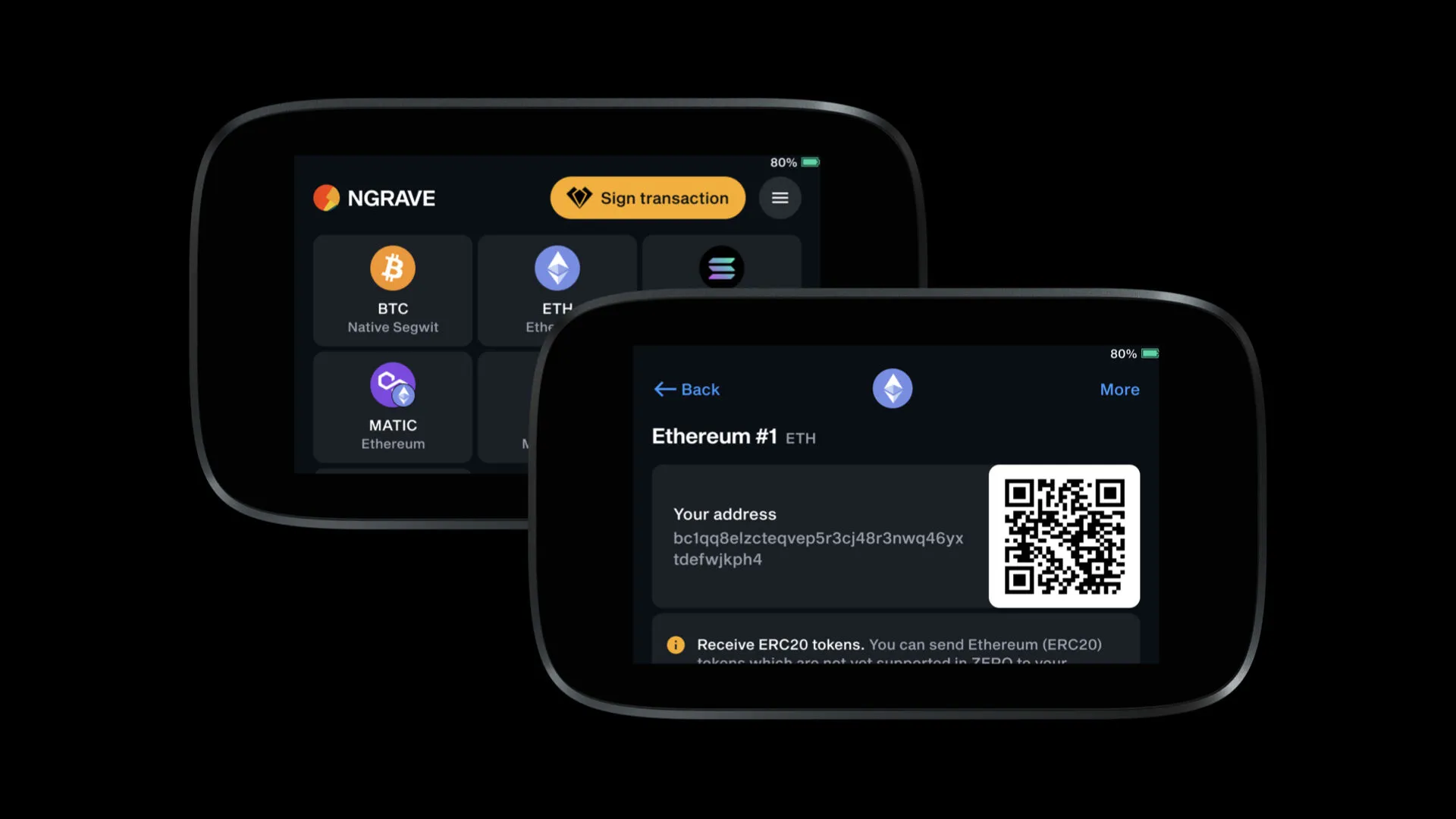
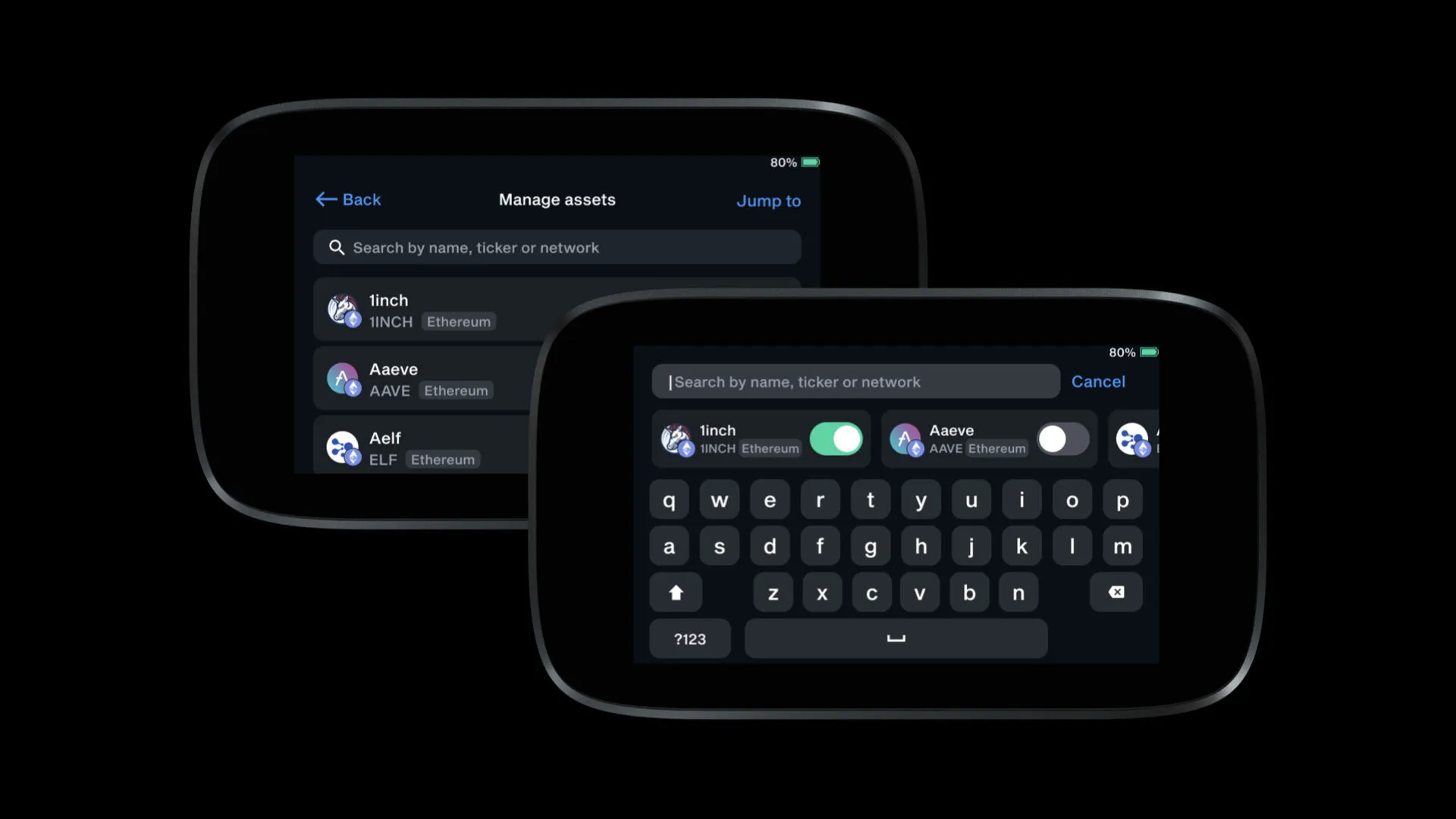
The Brief Was Bigger Than a Visual Refresh. It Was a System Problem.
The kickoff goals were practical. ZERO needed to become easier to use, easier to scale, and easier to build.
That meant solving three things at once:
- A clearer UX — better readability, repeated interaction patterns, stronger guidance, and better use of the larger ZERO screen
- A stronger system — reusable components, shared colors, spacing, buttons, list items, and content rules
- A better build process — less development guesswork, better design-to-copy-to-QA alignment, and performance constraints considered from the start
The redesign was not only about making ZERO look more modern. It was about creating a system that could make the product clearer for users and faster for Engineering to maintain.
The Research Problem: Air-Gapped Products Don't Give You Analytics.
ZERO is fully offline by design. It does not connect to the internet, does not phone home, and does not collect behaviour data.
That protects users, but it also creates a research problem. There were no funnels, drop-off points, heatmaps, or quantitative usage data to tell us where users struggled. So the sprint had to create its own evidence.
The First Signal Came From Support. The Next Came From Customers.
Before speaking to customers, I wanted to understand where friction already existed. I started with support data and conversations with the Customer Support team to identify recurring patterns, then used customer interviews to validate and deepen those insights.
- Zendesk Data — Analysed support tickets to identify recurring issues, friction points, and behavioural patterns across the customer journey.
- Customer Support Team — Interviewed support agents to understand the most common questions, pain points, and areas where users frequently required assistance.
- Customer Interviews — Validated and expanded on support insights through direct conversations with customers, uncovering the underlying causes behind recurring usability issues.
The Product Worked. The Experience Could Work Harder.
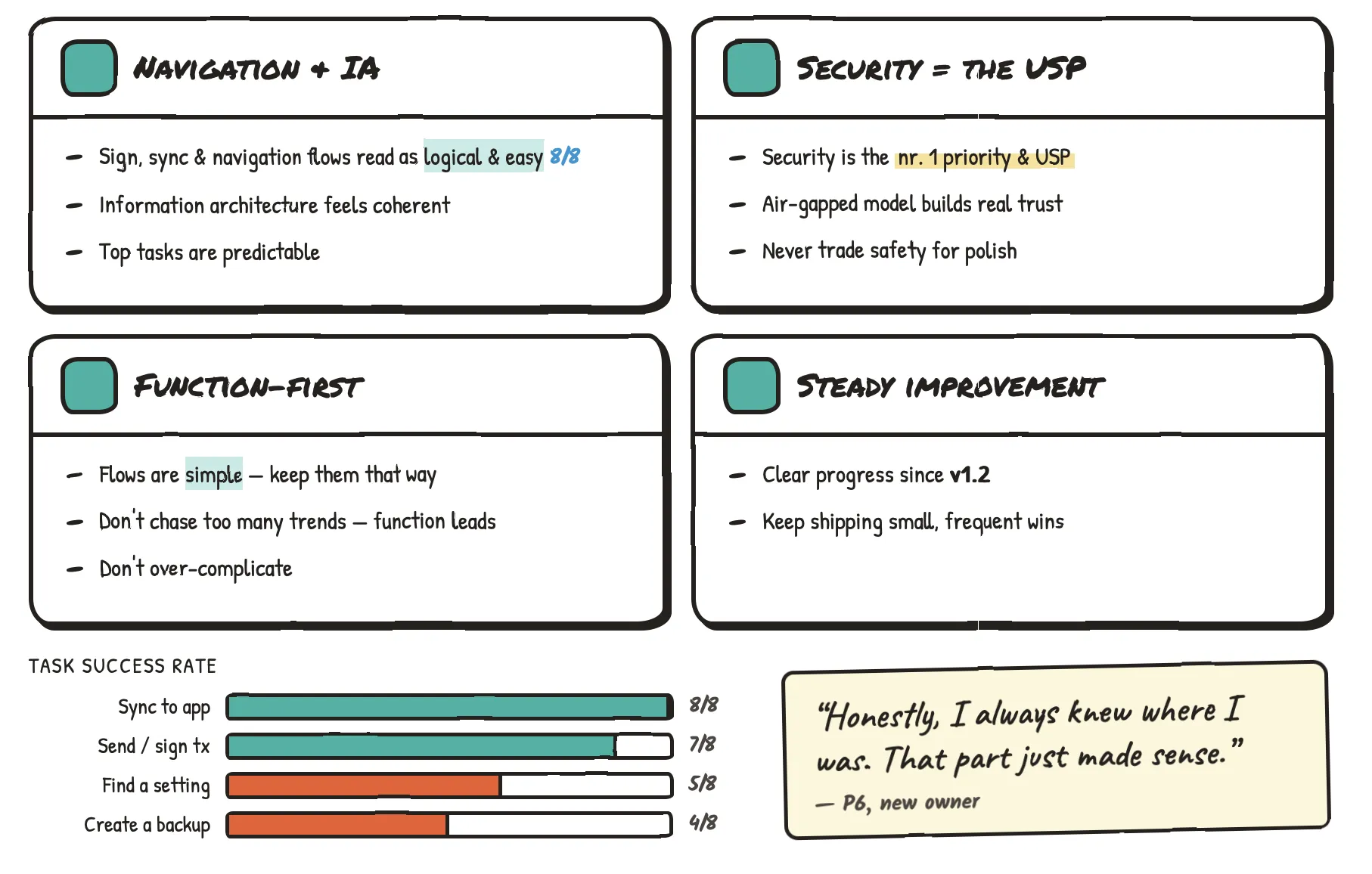
Users did not think ZERO was broken. Navigation, signing, syncing, and the overall structure were seen as logical and easy to understand.
That changed the redesign brief. This was not about reinventing ZERO. It was about making the product clearer, more scalable, and more premium while protecting what already worked.
Five Opportunity Areas Kept Coming Back.
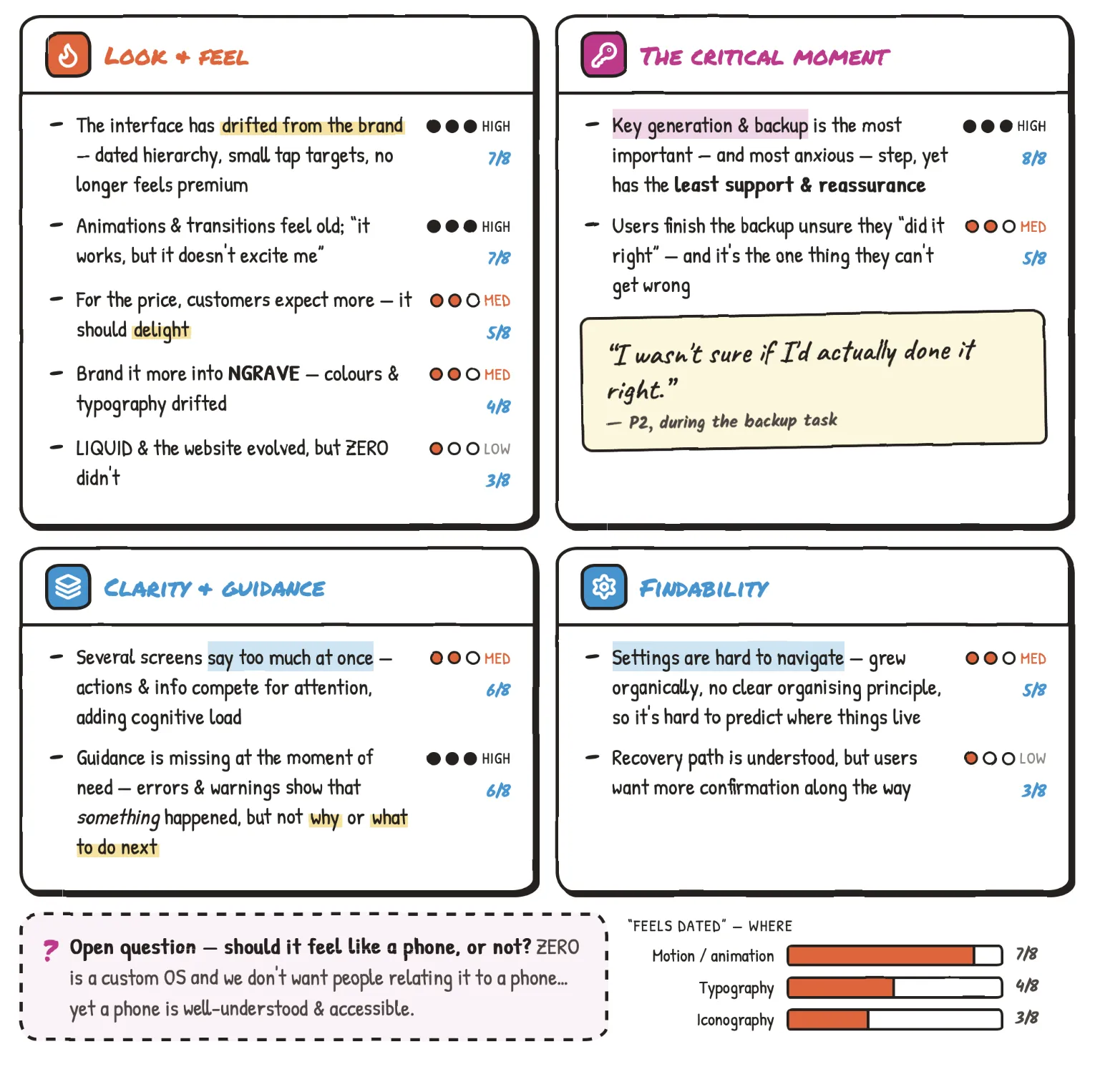
Across the research, five patterns kept coming back:
- Small interactions created friction: smaller tap targets, dense layouts, and small text made routine actions feel less reliable.
- The most critical step had the least support: key generation and backup created the most anxiety, but offered limited guidance or reassurance.
- Complex screens competed for attention: important actions, explanations, and status information were often fighting for the same space.
- Guidance was missing at the moment of need: warnings and error states often explained what happened, but not why or what to do next.
- Settings had grown without a clear structure: users struggled to predict where settings lived or find them quickly.
The issue was not one broken flow. It was the system underneath the flows. ZERO needed reusable components, clearer interaction patterns, shared content rules, and design decisions Engineering could adopt incrementally across future features.
I Turned the Top 3 Opportunities Into Prototypes to Validate.
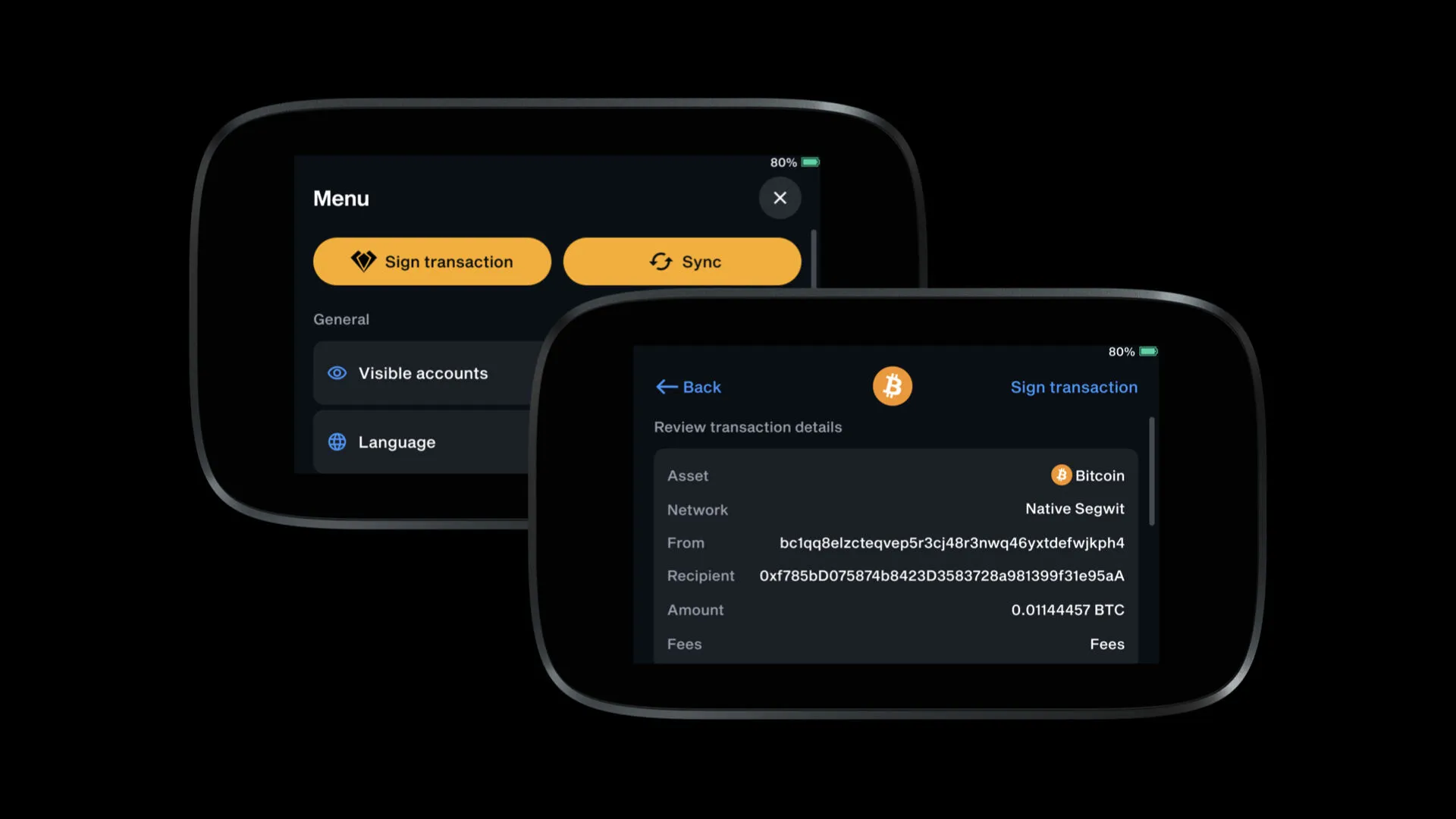
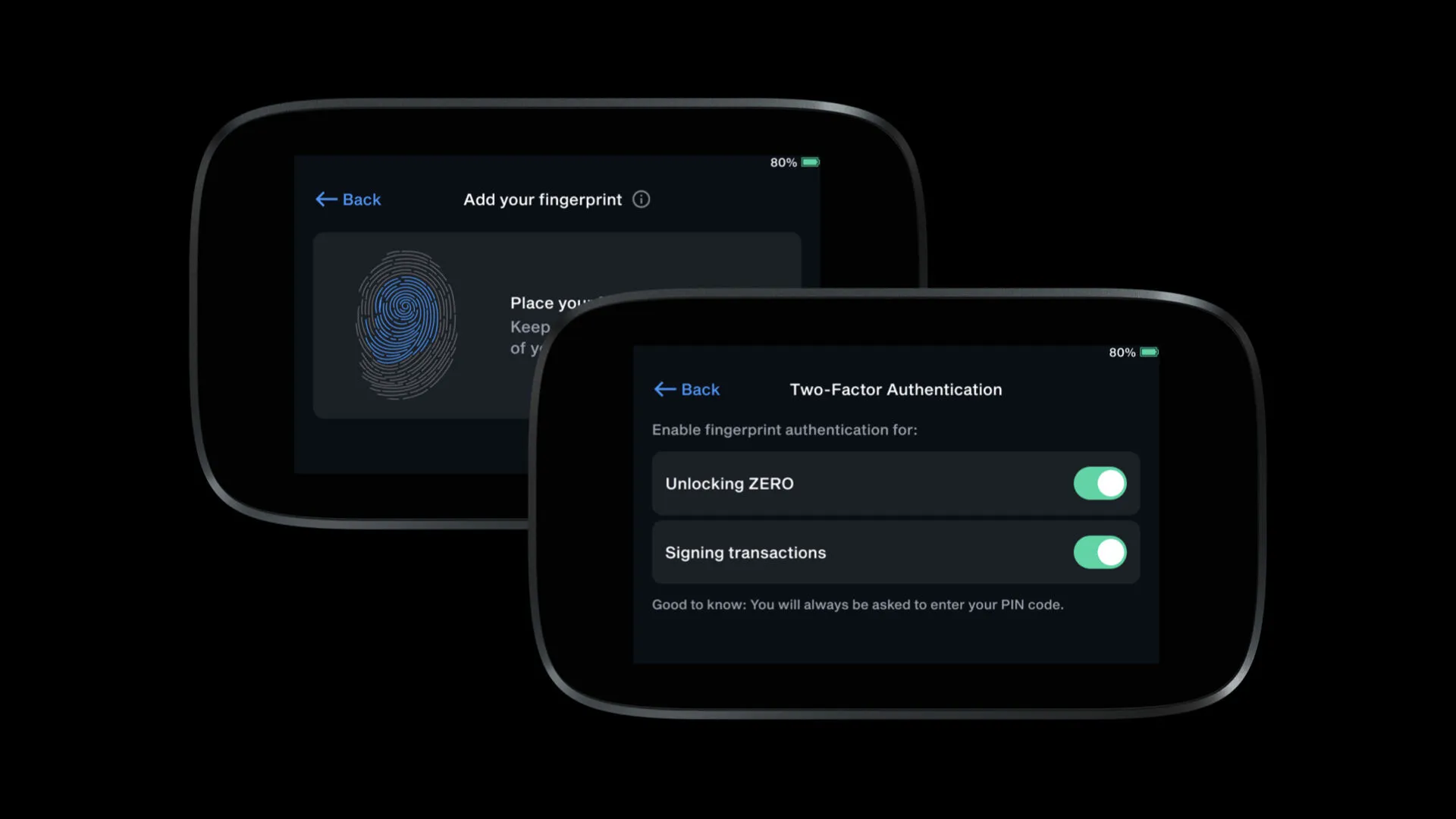
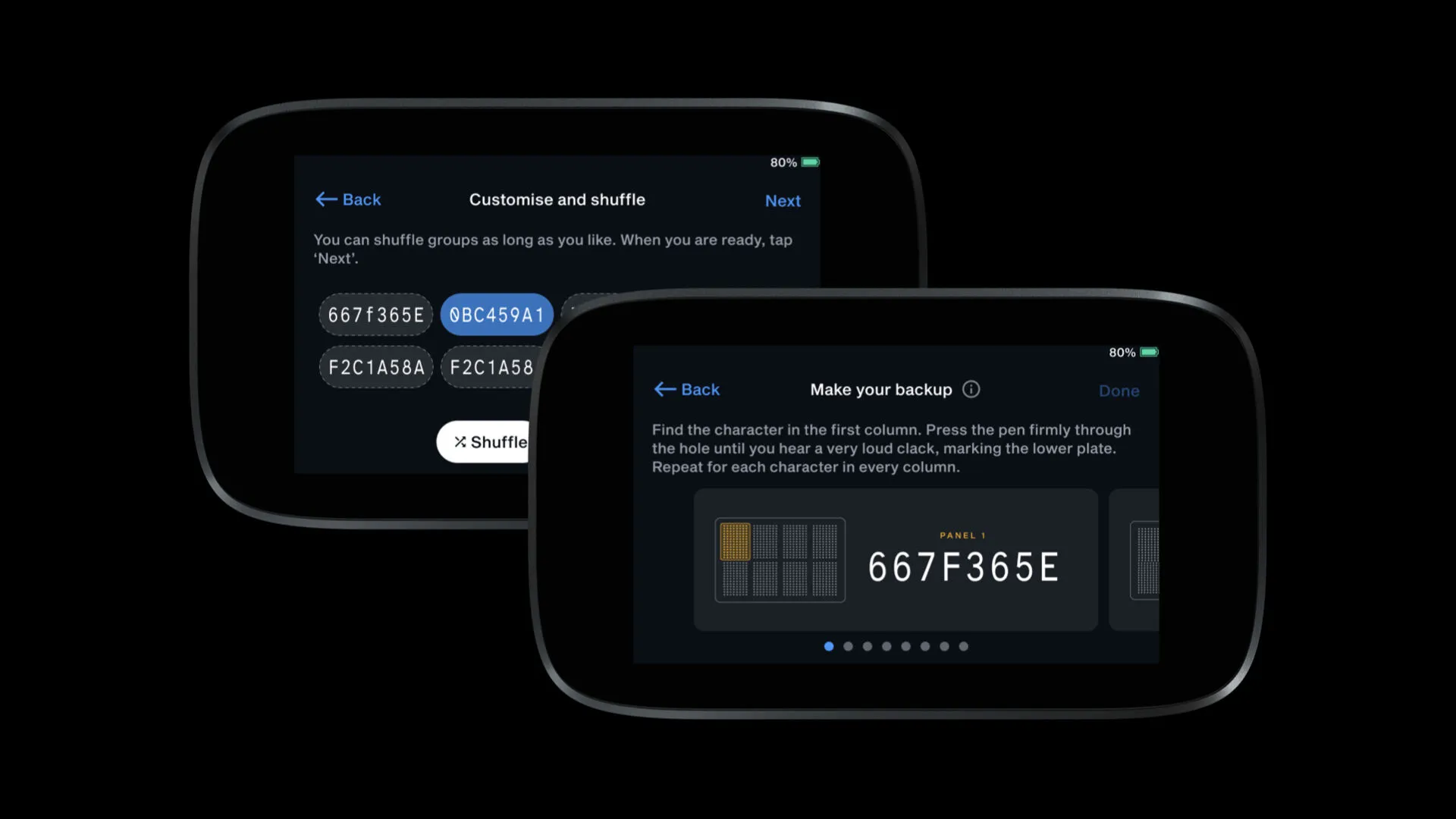
Based on the research, I focused the prototypes on the three flows that could prove the new direction fastest: onboarding, signing transactions, and settings.
These flows carried most of the discovered problems: readability, scalability, guidance, hierarchy, actions, copy, and reusable components.
I tested the top flows with 6 customers and integrated their feedback into the next iteration. Their feedback helped refine the settings hierarchy, transaction guidance, and which improvements were ready for short-term releases versus the deeper redesign track.
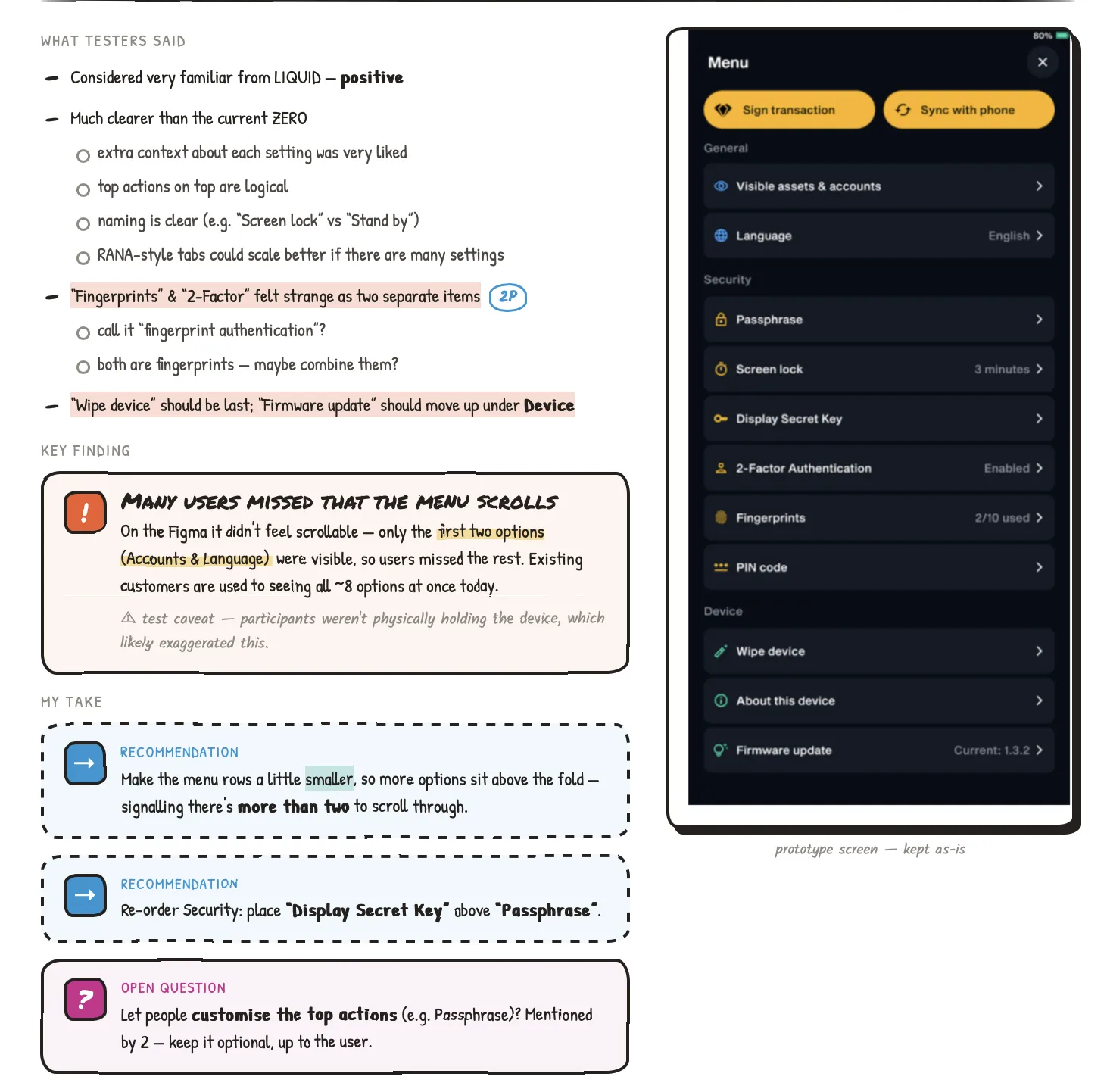
In the weeks after the sprint, I continued with targeted assumption testing around the additional opportunity areas we had discovered.
The work did not end as a broad redesign concept. It became a set of validated improvements we could prioritise with Product and Engineering.
The Sprint Turned the Redesign Into Roadmap Priorities.
We went ahead with the redesign, but treated it as a longer-term strategic initiative rather than a single large release.
Together with Engineering and Product, we translated the validated research findings into a prioritised roadmap.
Small effort, high-impact improvements such as contrast, button sizes, font sizes, tap targets, and copy improvements were prioritised for upcoming releases, allowing the team to deliver immediate usability improvements without waiting for a full redesign.
Larger structural improvements, including a clearer information hierarchy, stronger transaction guidance, improved onboarding support, and a reusable UI system, became part of a longer continuous redesign track.
The sprint did not just define where ZERO needed to go. It helped the team separate quick wins from long-term investments, align on priorities, and turn research insights into roadmap decisions.