Argenta was in the middle of a digital transformation.
The bank served more than 1.5 million clients, but its digital products needed clearer navigation, better mobile flows, stronger accessibility, and one consistent design language across channels.
I worked on the transformation track for 4.5 years as a consultant through Monkeyshot, helping establish the design foundation behind Argenta's digital ecosystem.
Research Became Part of the Transformation Track.
Together with UX researchers from Monkeyshot, I helped establish research tracks across key digital experiences, including website navigation, investment journeys, and branch locator experiences.
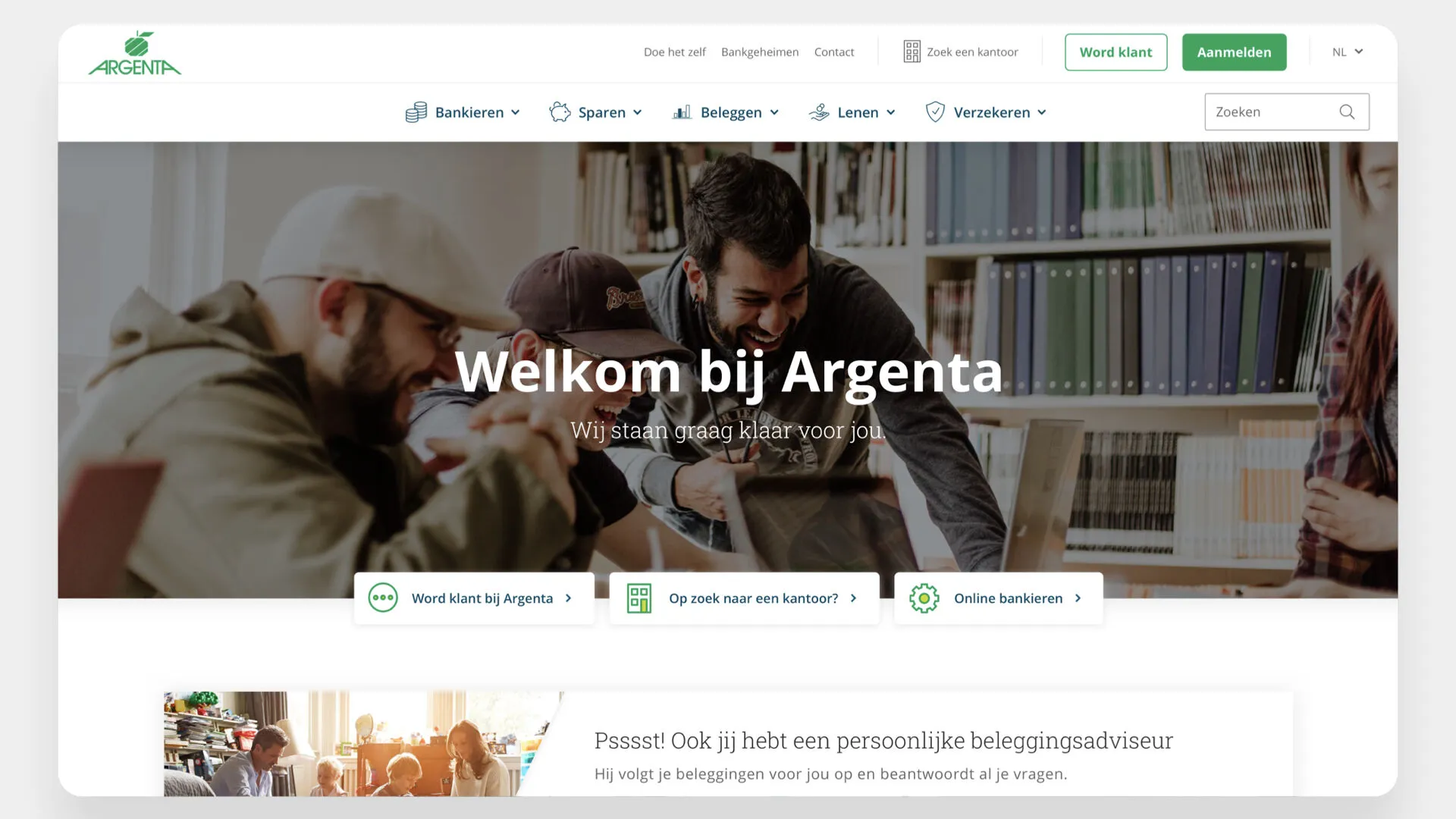
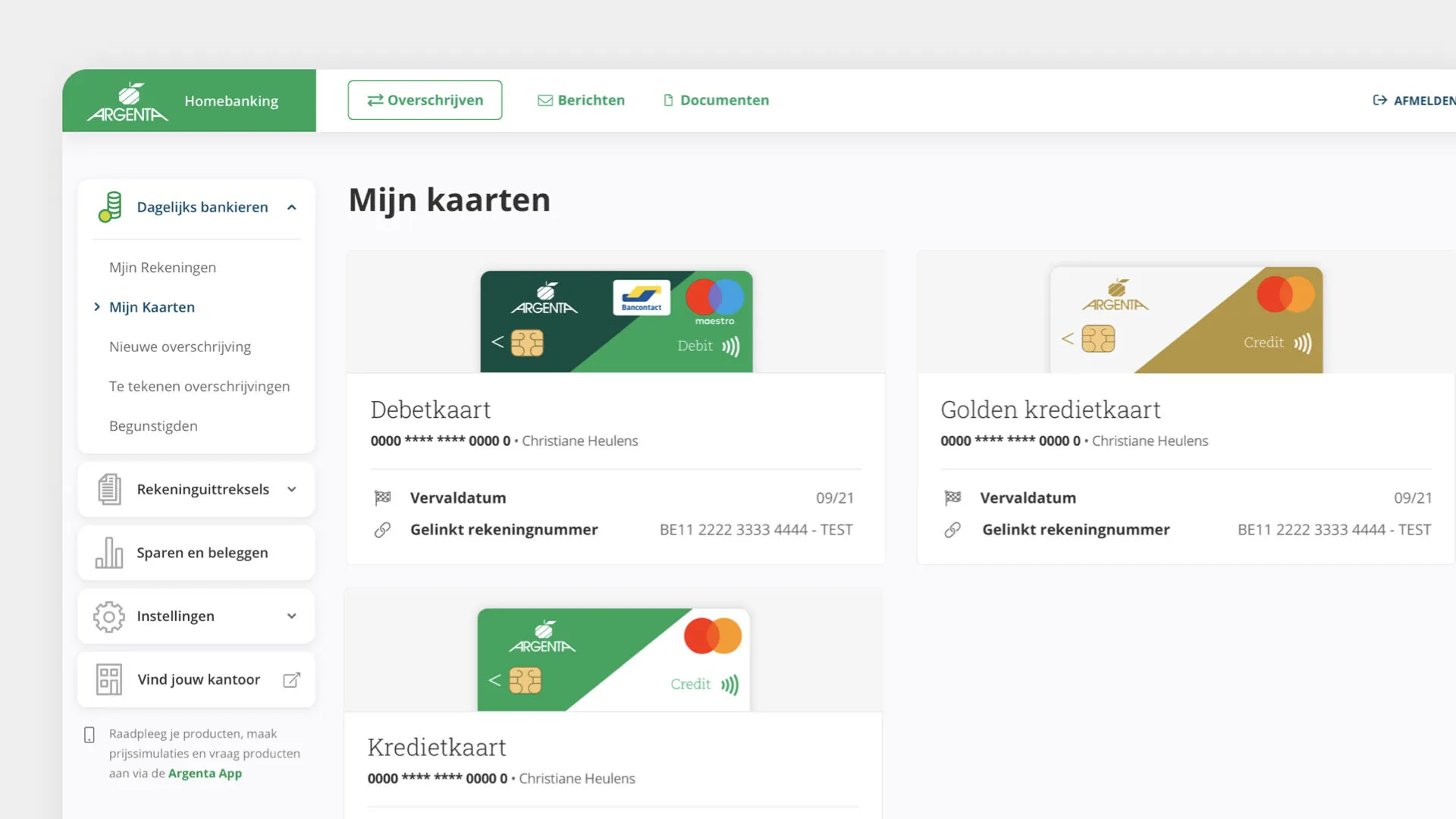
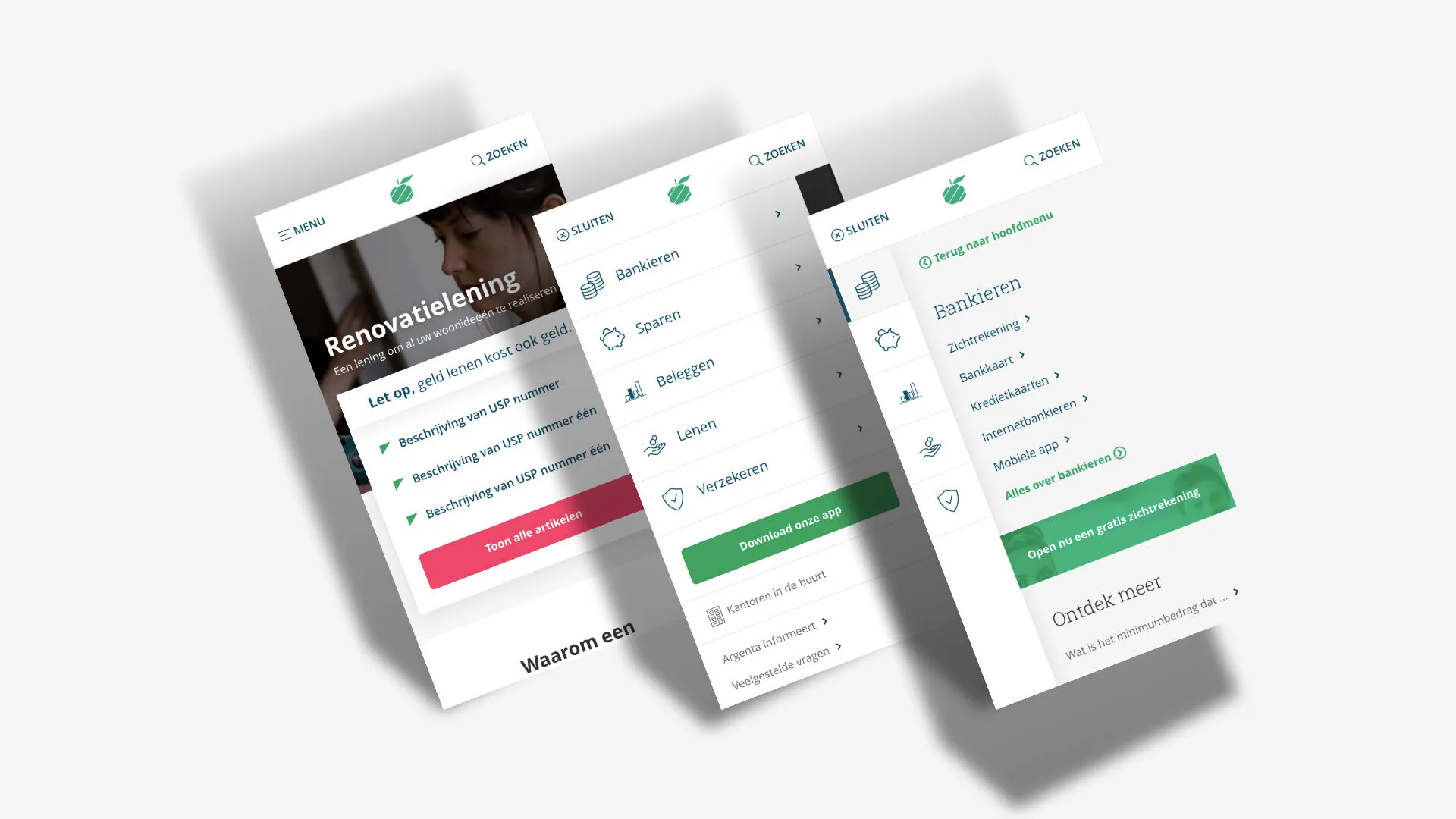
We used qualitative and quantitative research to validate information architecture, test usability, and identify friction points across the website, Homebank, and mobile app.
Beyond design, I coordinated research efforts between Argenta stakeholders and external researchers, helping align business objectives, research priorities, and design decisions.
The work introduced a more structured research practice and helped teams make product decisions with greater confidence.
Accessibility Was Tested With the People Who Needed It Most.
WCAG compliance was one of the biggest drivers for the website redesign.
We continuously tested designs with users with visual impairments, including blind participants using assistive technologies. Accessibility became less about passing a checklist and more about whether people could complete banking tasks independently.
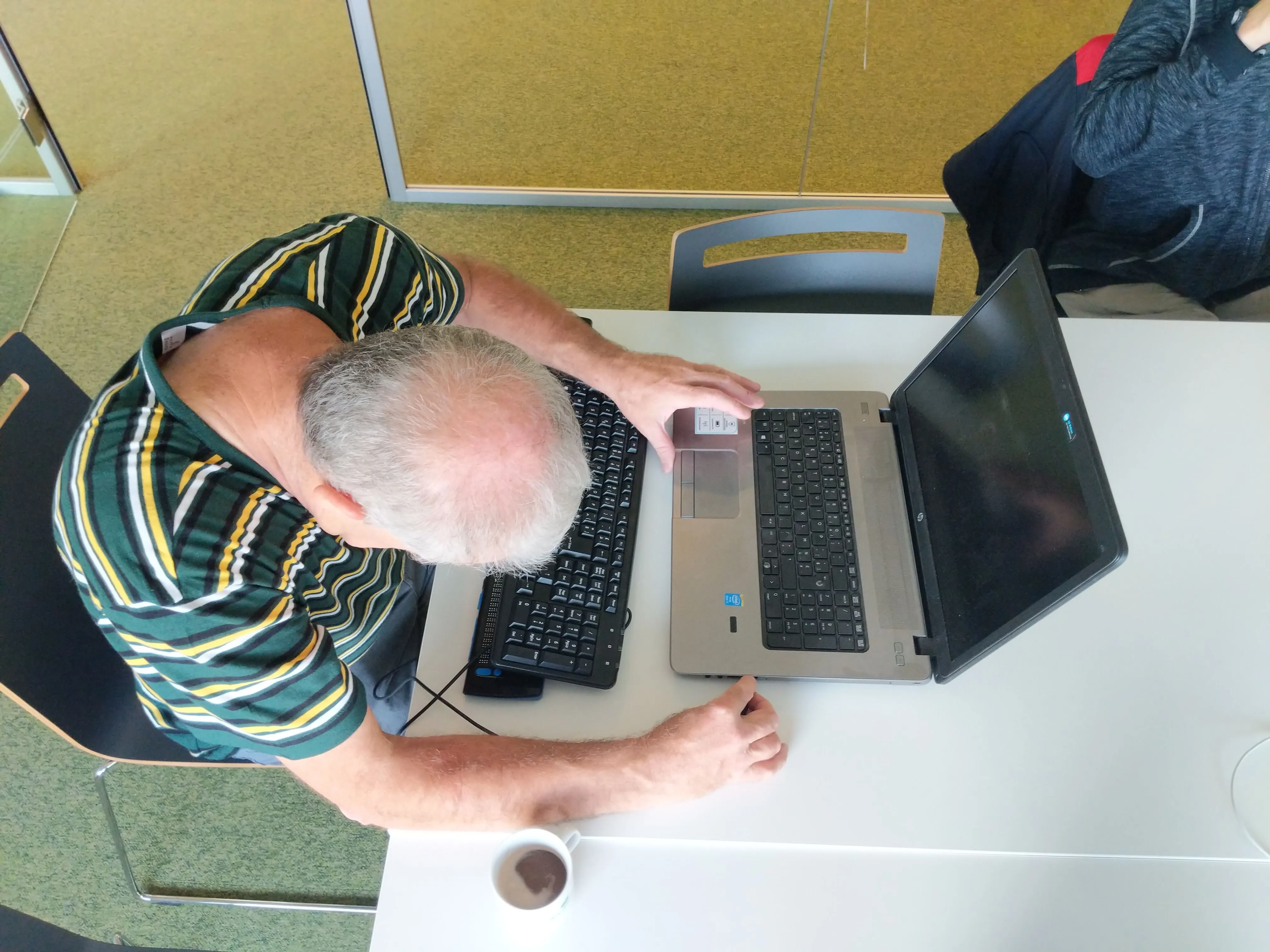
The findings became a prioritised backlog for design, content, and development follow-up.
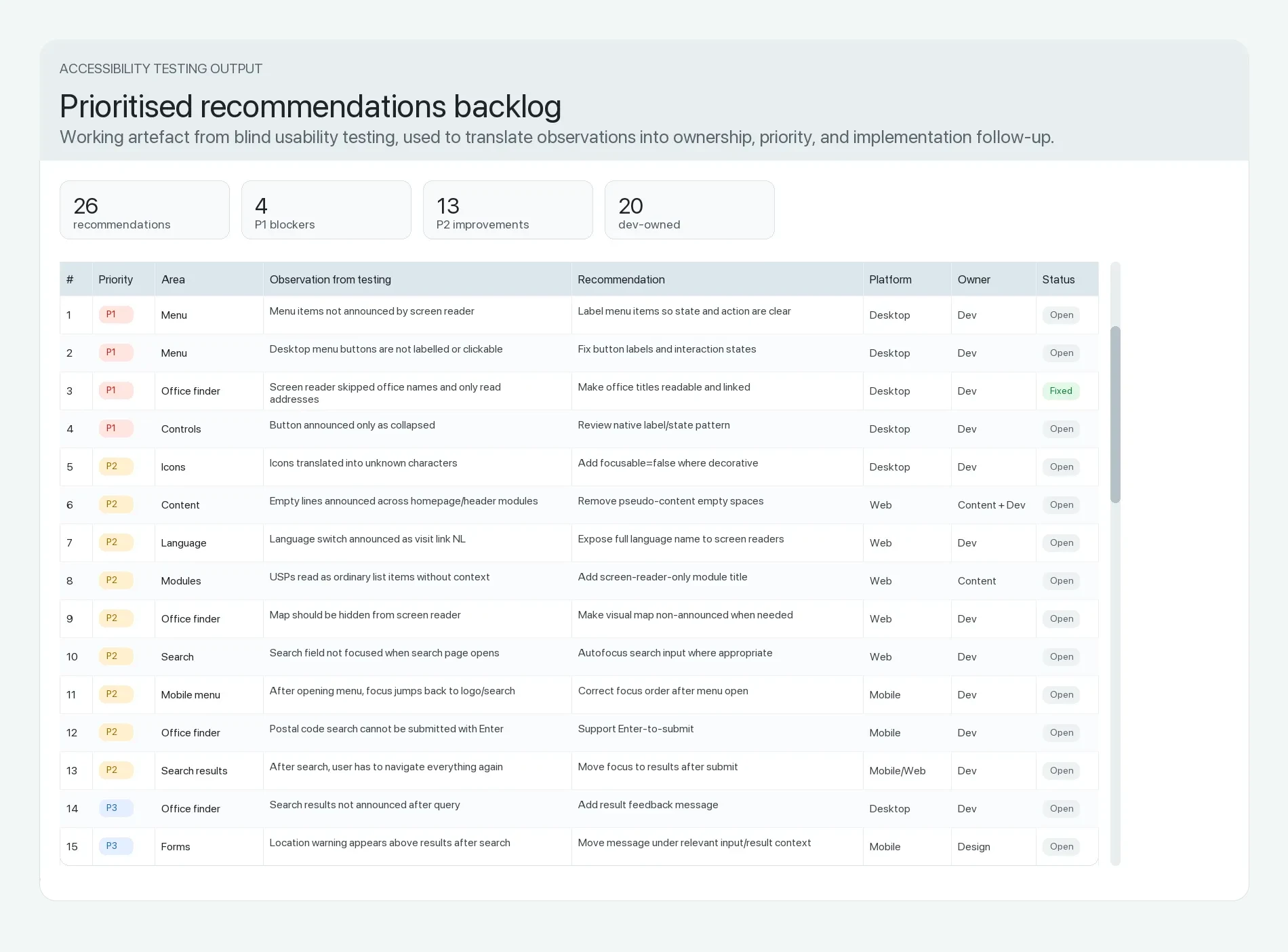
The recommendations influenced navigation, content structure, form behaviour, contrast, focus states, and how key actions were presented.
The outcome was a WCAG2.0-compliant website and mobile app built around real accessibility needs.
The Website and Online Banking Needed a System, Not More One-Off Pages.
The website redesign exposed a scaling problem.
Different teams were solving similar problems in different ways, creating inconsistency for customers and unnecessary duplication across products.
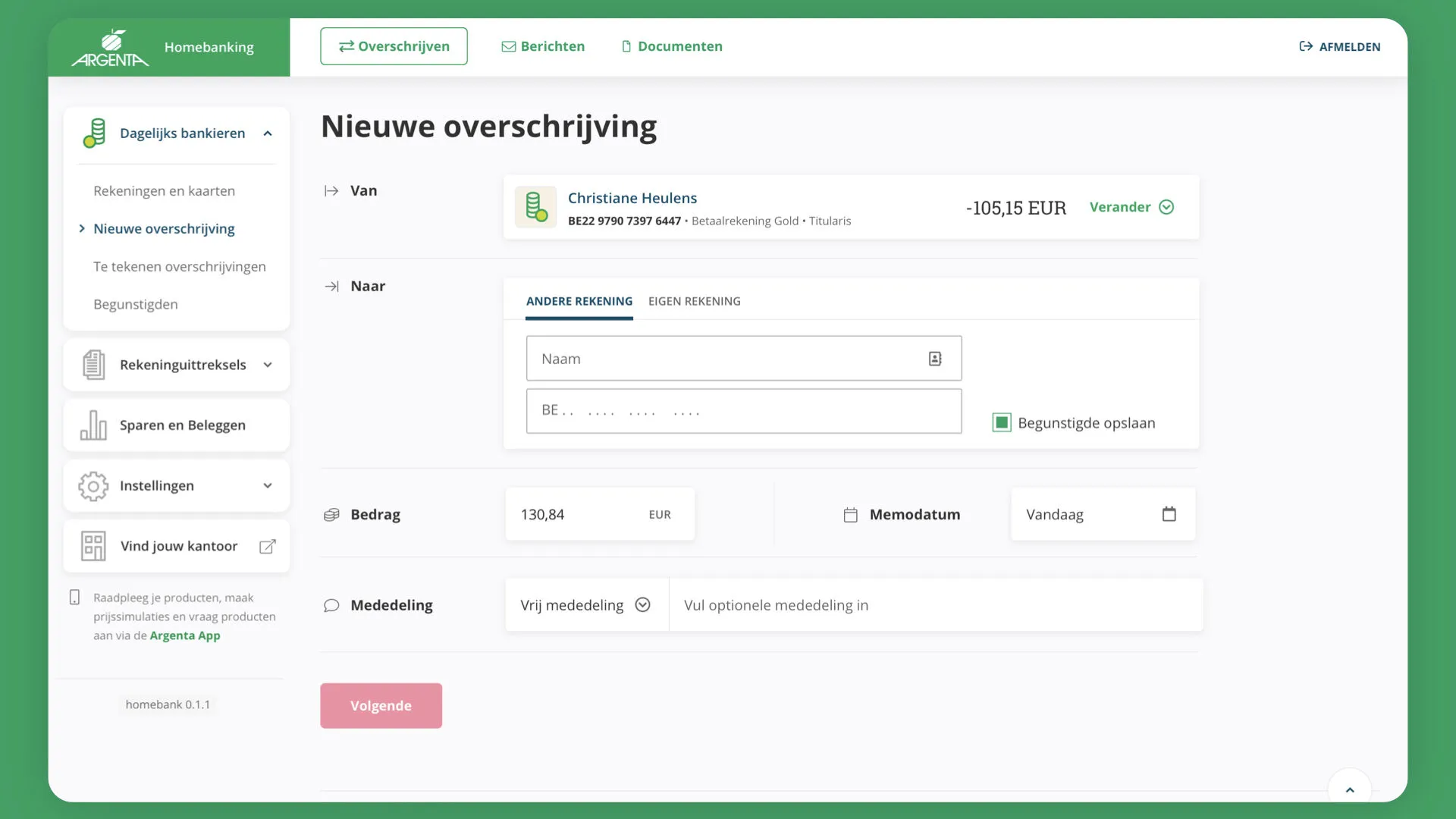
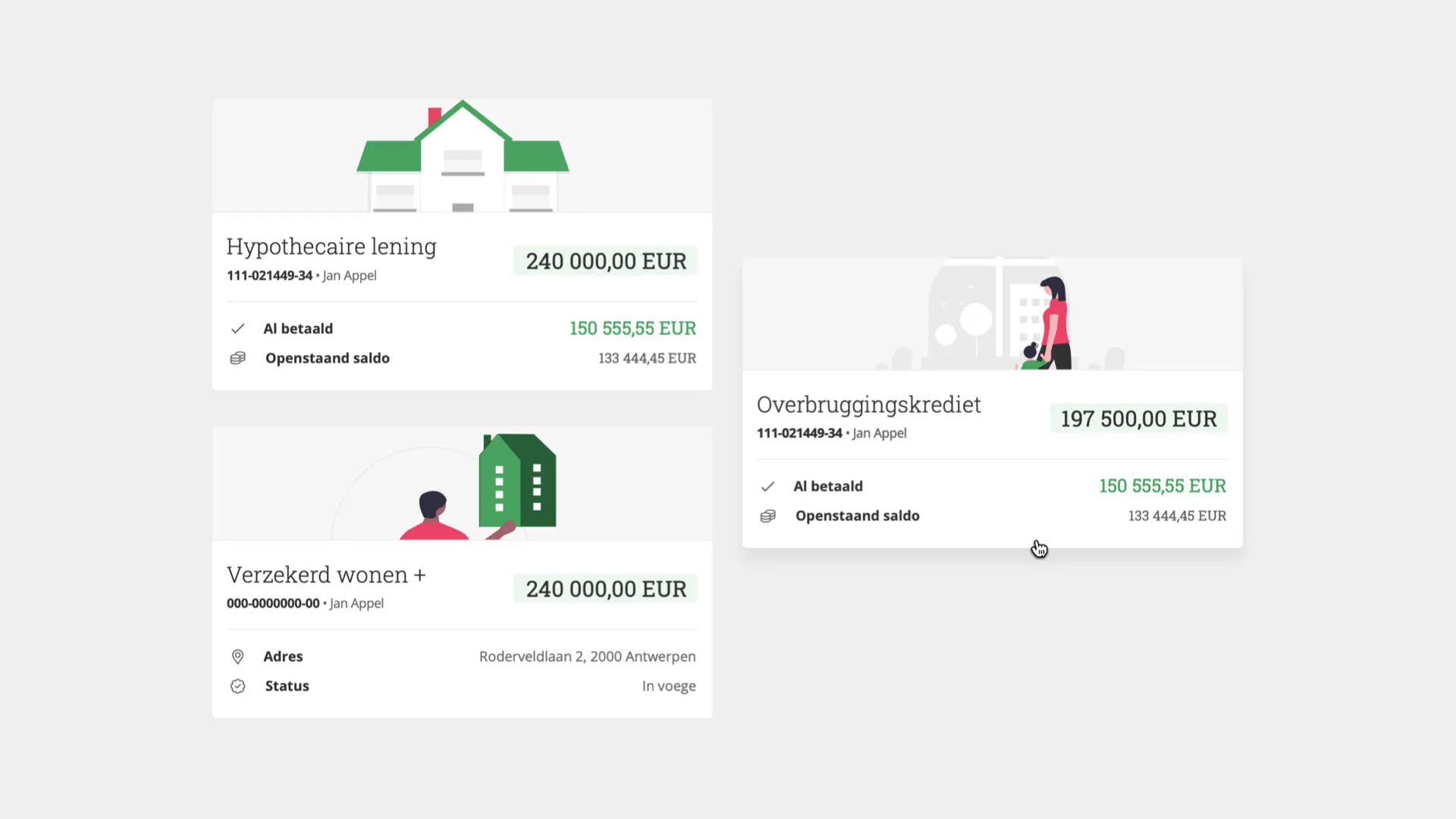
I helped establish a shared design foundation across digital channels: common patterns, governance, and design principles that aligned experiences across the website, home banking, careers platform, and investor portal.
The result was a more consistent customer experience and faster decision-making across teams.
The Mobile App Had to Keep Earning Trust.
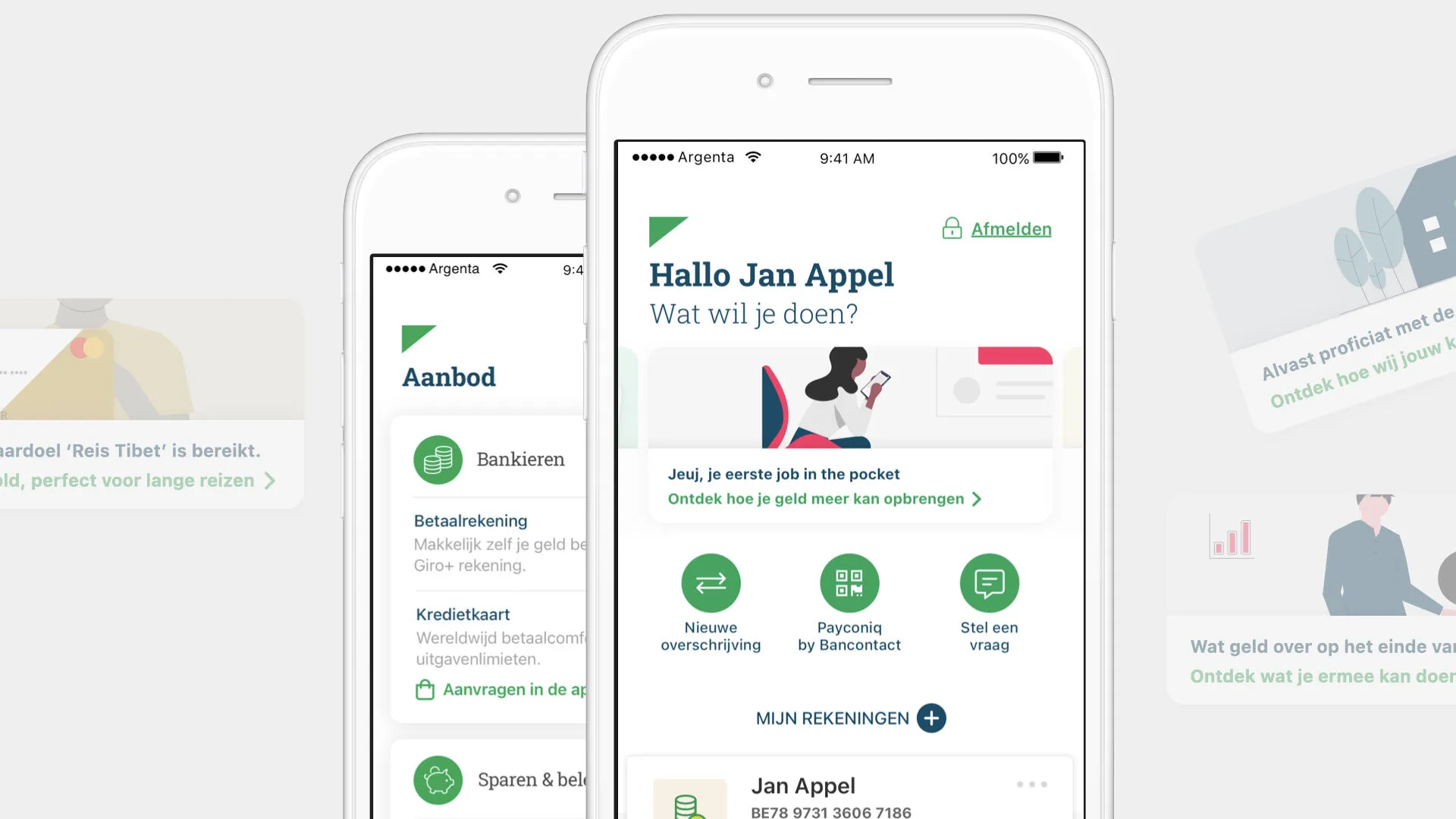
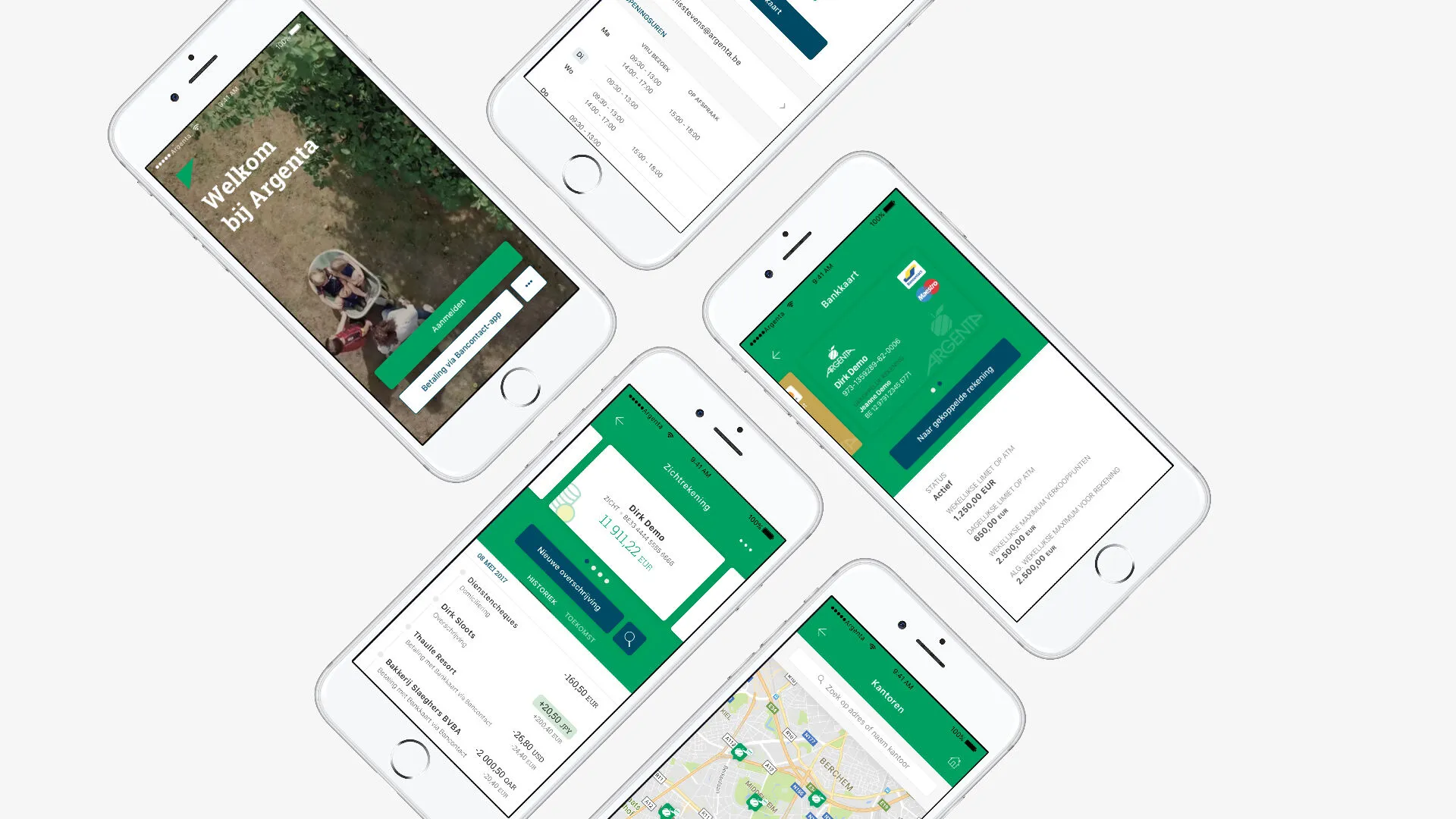
Later, I became lead designer for the Argenta mobile app.
I kept the work close to customer feedback. The clearest signal was not that the app was broken, but that customers already trusted it for everyday banking.
That changed the design challenge. Any improvement had to protect the trust already built into the core banking journey.
The work focused on clearer flows, stronger hierarchy, better feedback, and a visual language consistent with the wider Argenta ecosystem.
This included focused improvements to specific high-trust flows, such as becoming a customer, where identity verification integrations like Onfido and itsme had to feel clear, secure, and easy to complete.
The Transformation Reached 1.5 Million Clients.
The work touched the digital experience of more than 1.5 million Argenta clients.
The mobile app became a much stronger channel. Active mobile app users almost doubled between 2017 and 2020, growing from 273,000 to 535,000. Engagement was strong too: 375,000 weekly app users, 175,000 daily app users, 36% DAU/MAU stickiness, and 90% month-one retention.
The app rating climbed from 2.6 to 4.5 in four years, with later ratings reaching 4.6.
Across 4.5 years, I helped Argenta move from separate digital channels toward a more consistent product experience: research-backed, accessible, reusable, and easier to maintain.
The outcome was not one redesign. It was a stronger foundation for digital banking at Argenta.