NGRAVE supports a growing list of chains and tokens. More than 1,000 chains, tokens and coin requests were competing for roadmap space. Every quarter, engineering had to decide what to build next.
Those decisions were being made on instinct. The loudest request, the most recent conversation, a competitor announcement. No framework. No way to defend the call afterward.
I built one in 3 days.
I designed the scoring model, aligned the criteria with Product and Engineering, and turned the output into a roadmap decision tool.
The Loudest Request Wasn't Always the Right One.
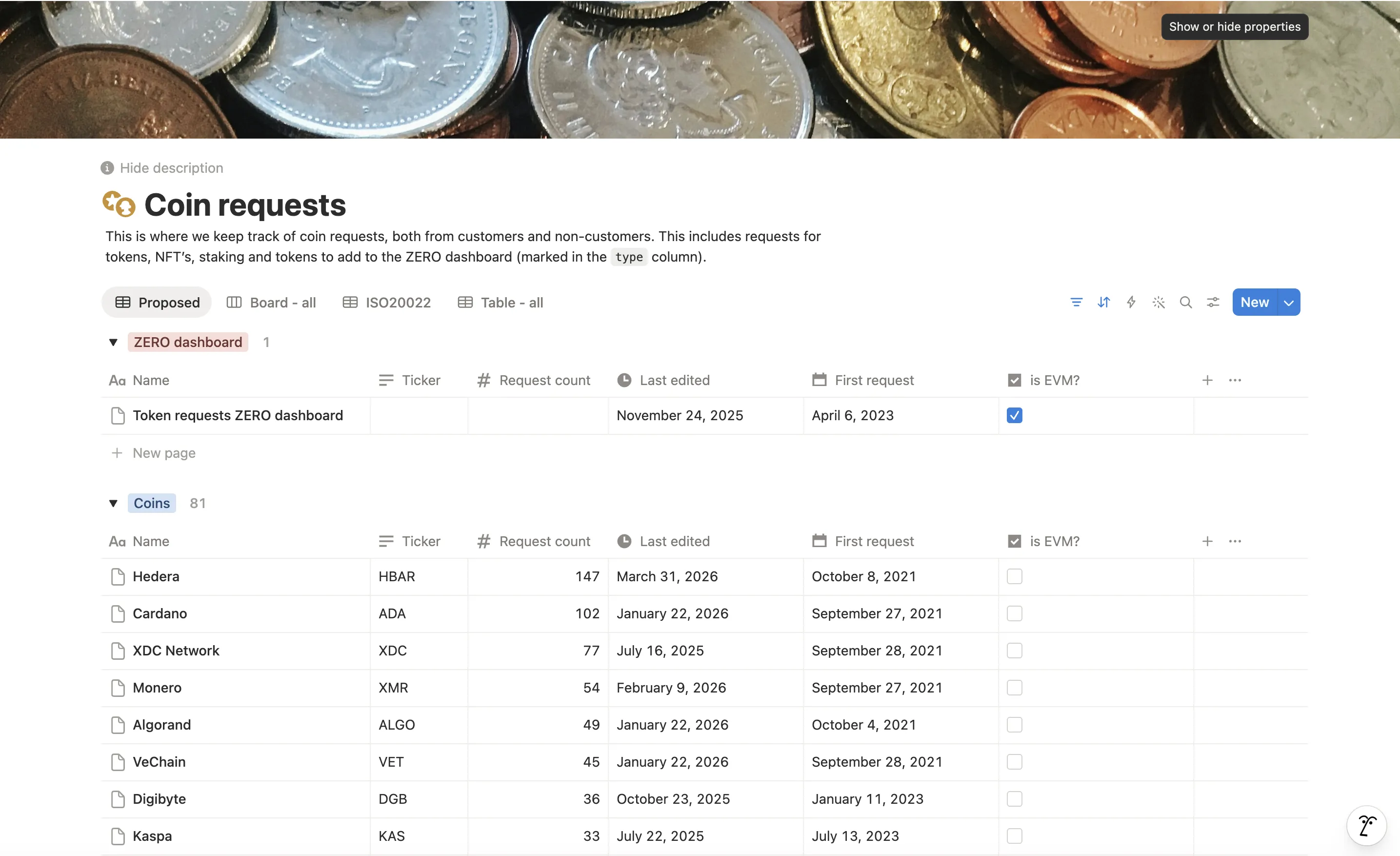
Support kept a running Notion doc of coin and token requests. I started there. Using AI to analyse recurring requests across multiple months, filtering out one-off asks and short-lived trends. What I was looking for: sustained patterns. Coins people kept asking about over time, not spikes.
That gave me a first list ranked by customer demand. More than 1,000 chains and tokens appeared across the backlog. I narrowed that down to 19 realistic candidates worth scoring in detail.
That gave me a demand signal. But demand alone does not make a build decision. A chain with strong customer pull might still be a six-month engineering project with zero swap partner support. I needed more dimensions.
Demand Was Only One Signal. I Added the Missing Three.
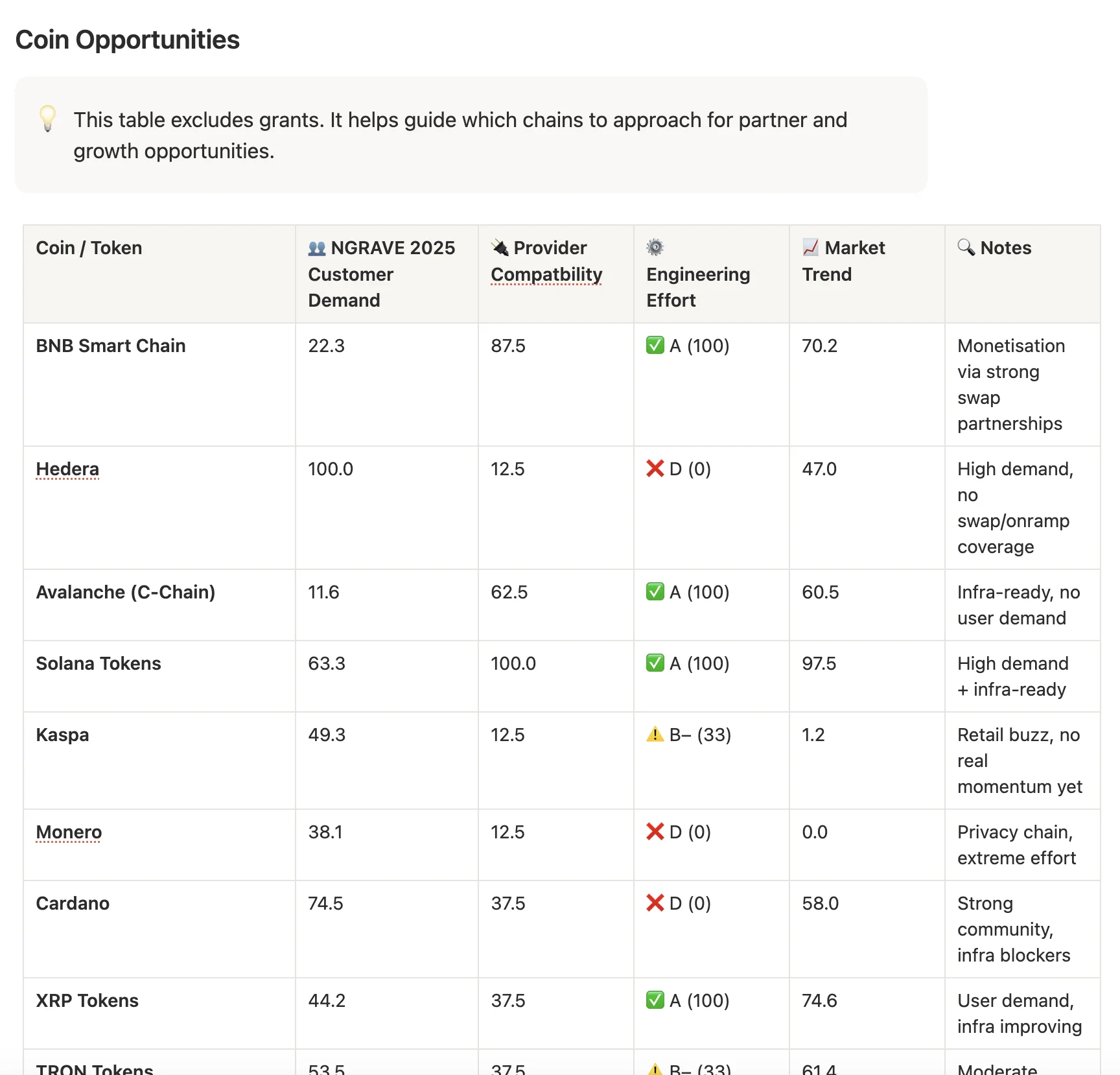
I pulled three additional data sources and combined them with customer demand into a single prioritisation table.
- Partner coverage from integrations, providing transactional revenue
- Market trends scraped from blockchain trackers
- Engineering effort estimates from the team
For the first time, engineering and product had a shared view of the same trade-offs. What to build, what to park, and why.
The Prioritisation Had to Work for Product and Engineering.
Before prioritising anything, I aligned with the Engineering Lead and Product Owner on what actually mattered when deciding whether to support a new blockchain.
Four criteria:
- Customer Demand — sustained requests over time
- Business Impact — available partner support for transactional revenue
- Engineering Effort — estimated directly by the engineering team
- Market Momentum — early signal for emerging ecosystems
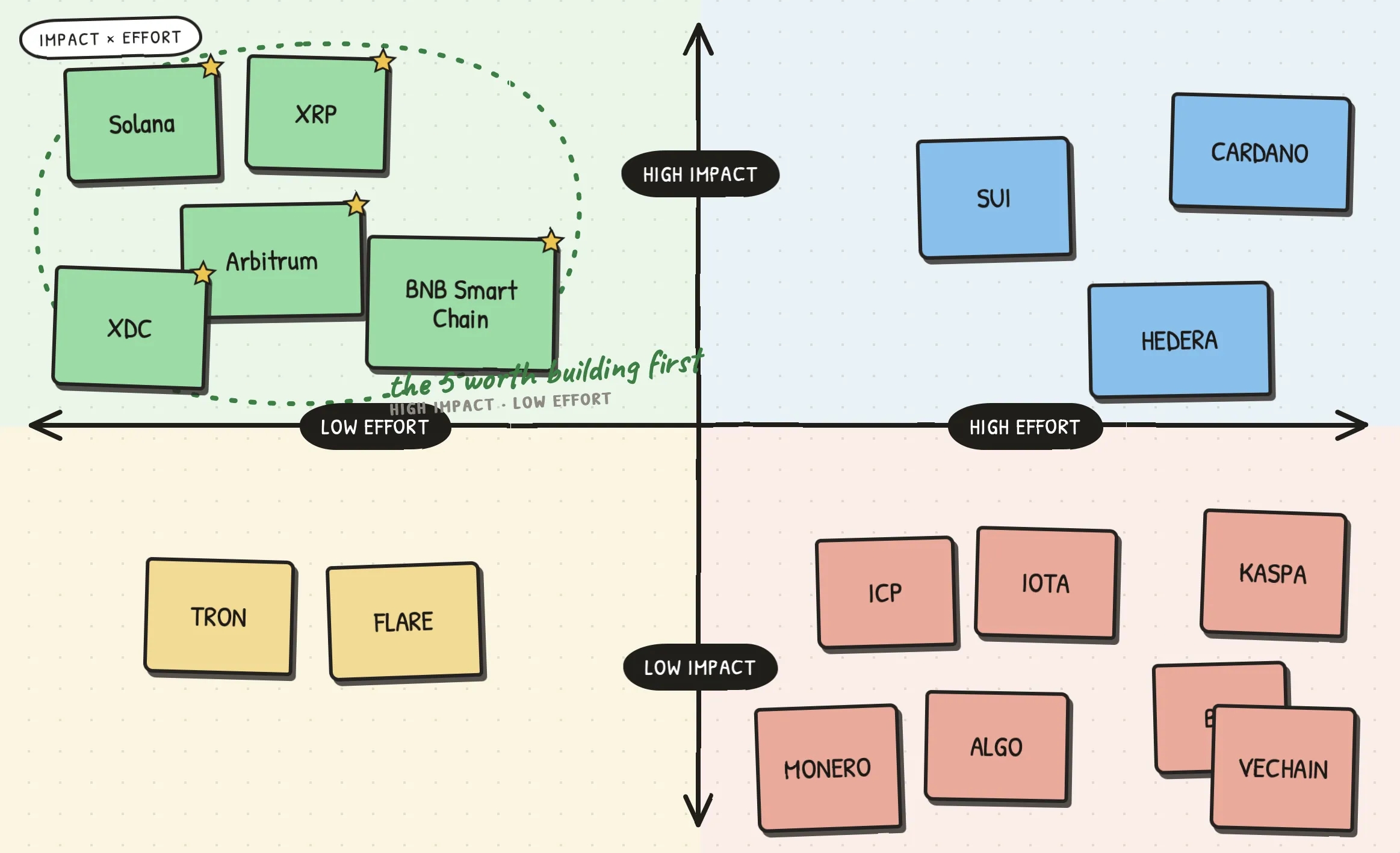
Each chain then mapped onto an effort-versus-value matrix. High-value, low-effort opportunities surfaced immediately.
Because the Engineering Lead and Product Owner shaped the criteria from the start, the output already had buy-in. When rankings challenged assumptions, the conversation stayed on the data. Not on opinions.
The Data Challenged the Obvious Choices.
Once all four dimensions were scored and weighted, a few things became clear that hadn't been visible before.
High demand doesn't mean high priority. Hedera ranked first on customer requests but scored zero on provider coverage. No swap or on-ramp partner supports it. It sits at rank 6, not rank 1.
Some chains with no direct customer push are still high-value. While Arbitrum generated relatively few customer requests in 2025, its broad provider support, large market capitalisation, and low technical implementation effort made it a compelling monetisation opportunity regardless.
Engineering effort as a filter changed the list significantly. Cardano and SUI score well on demand and momentum. Both carry D-grade engineering effort. Both dropped below the fast-track threshold.
Five Chains Moved From Debate to Fast Track.
Five chains met the bar. All A-grade engineering effort. All with meaningful provider support. Together they resolve 21% of open customer requests.
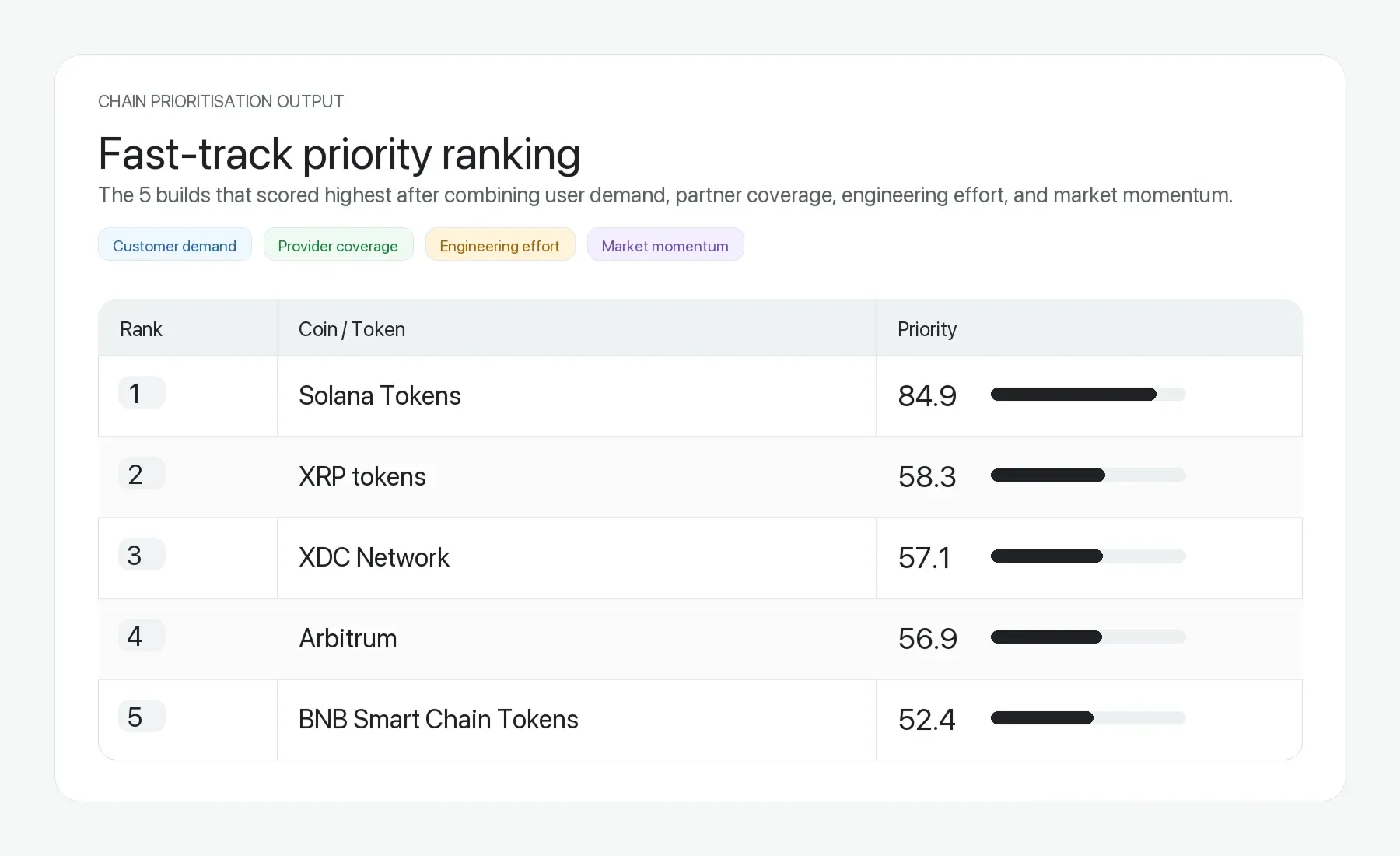
The detailed priority table covered 19 shortlisted chains from the wider 1,000-request universe. Engineering and business development now had a clear, defensible view of what to build, what to park, and what to take to partners.
Roadmap Decisions Became Something You Could Defend.
The framework replaced a conversation-driven process with something repeatable. Every decision traces back to data. When someone asks why not Cardano, the answer is in the scores.
It also makes strategic tensions visible. High demand with no provider support. High revenue potential with no user pull. Those tensions used to sit inside someone's gut feeling. Now they're on the table.