Customer support was handling a growing volume of repetitive tickets despite the answers already existing in our Helpcenter.
The self-service ratio was low, support costs were increasing, and customers were struggling to find information independently.
The objective was simple: reduce support demand by helping users find answers without contacting support.
The project connected research, information architecture, UI design, and implementation planning so the team could reduce support demand without creating unnecessary new content.
Before Touching the Design, I Found the Real Failure Point.
We knew from customer support that once they shared content directly, people were able to help themselves. The problem wasn't the answers. It was whether users could find them on their own.
- The Same Four Questions Were Generating 20% of All Tickets. I analysed several months of Zendesk ticket data to understand where support demand originated. Four recurring questions accounted for roughly 20% of all incoming tickets. Each had clear documentation available, suggesting the issue wasn't content quality but content discoverability.
- Search Wasn't the Problem. Navigation Was. I mapped the Helpcenter funnel. Search was easy to find and widely used. But the moment users moved into categories, dropoff spiked. They couldn't match their question to the existing structure.
Now We Know The Data, Let’s Ask Our Customers.
Before redesigning anything, I wanted to validate whether customers naturally organised information differently.
Customers Grouped Questions by Task, Not Product Area.
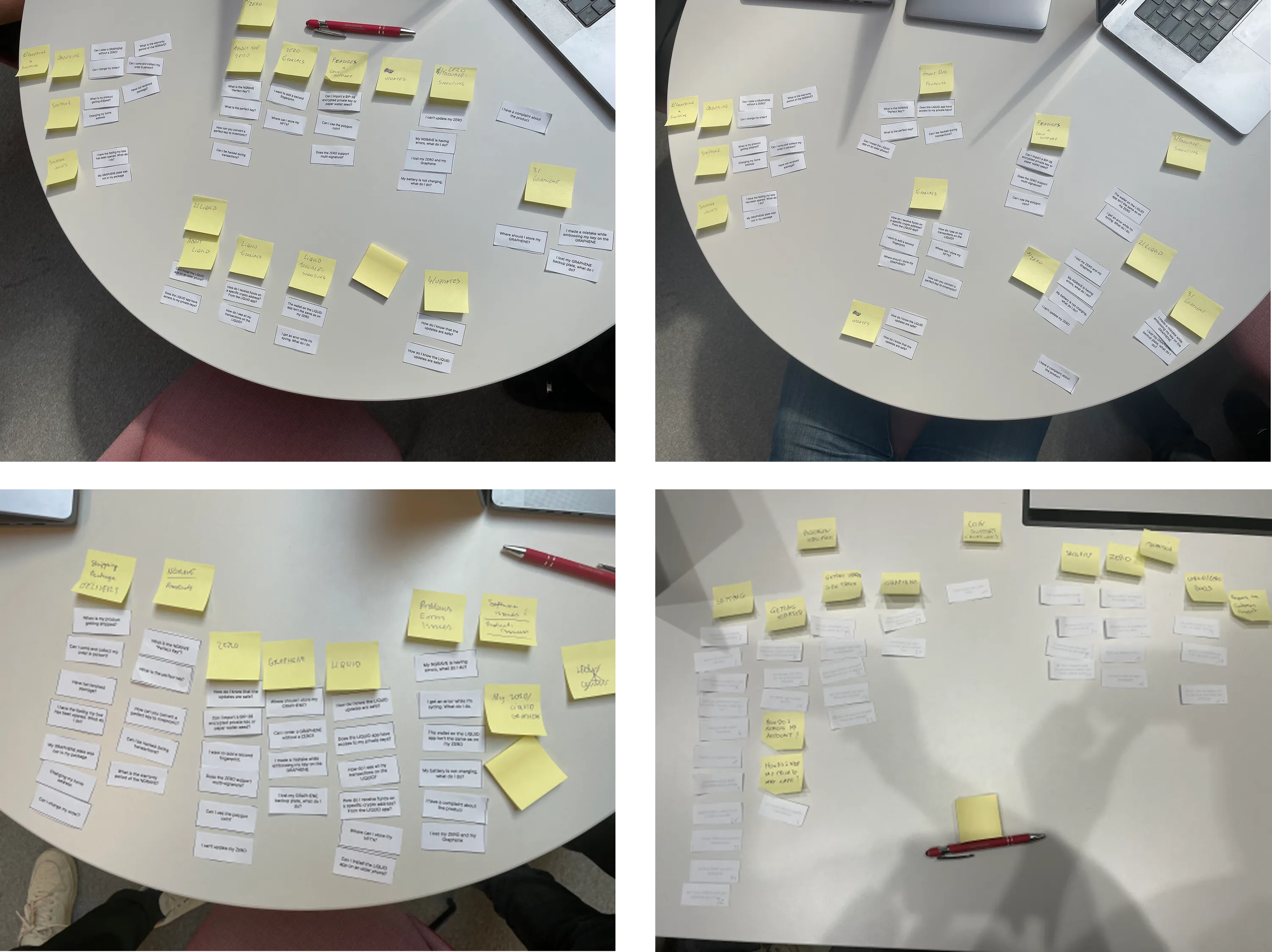
To redesign the information architecture without guessing, I ran a physical card sorting exercise with NGRAVE customers. Top support questions were printed on cards. Participants grouped them however made sense to them.
Two distinct structures emerged. Both were task-based. Neither matched what we had.
What was clear is that the current architecture reflected how NGRAVE was built, not how customers think. The card sort made the mismatch visible: customers grouped questions around tasks and problem-solving moments, while the existing Helpcenter followed NGRAVE's internal product architecture.
Treejack Testing Showed Which Structure Actually Worked.
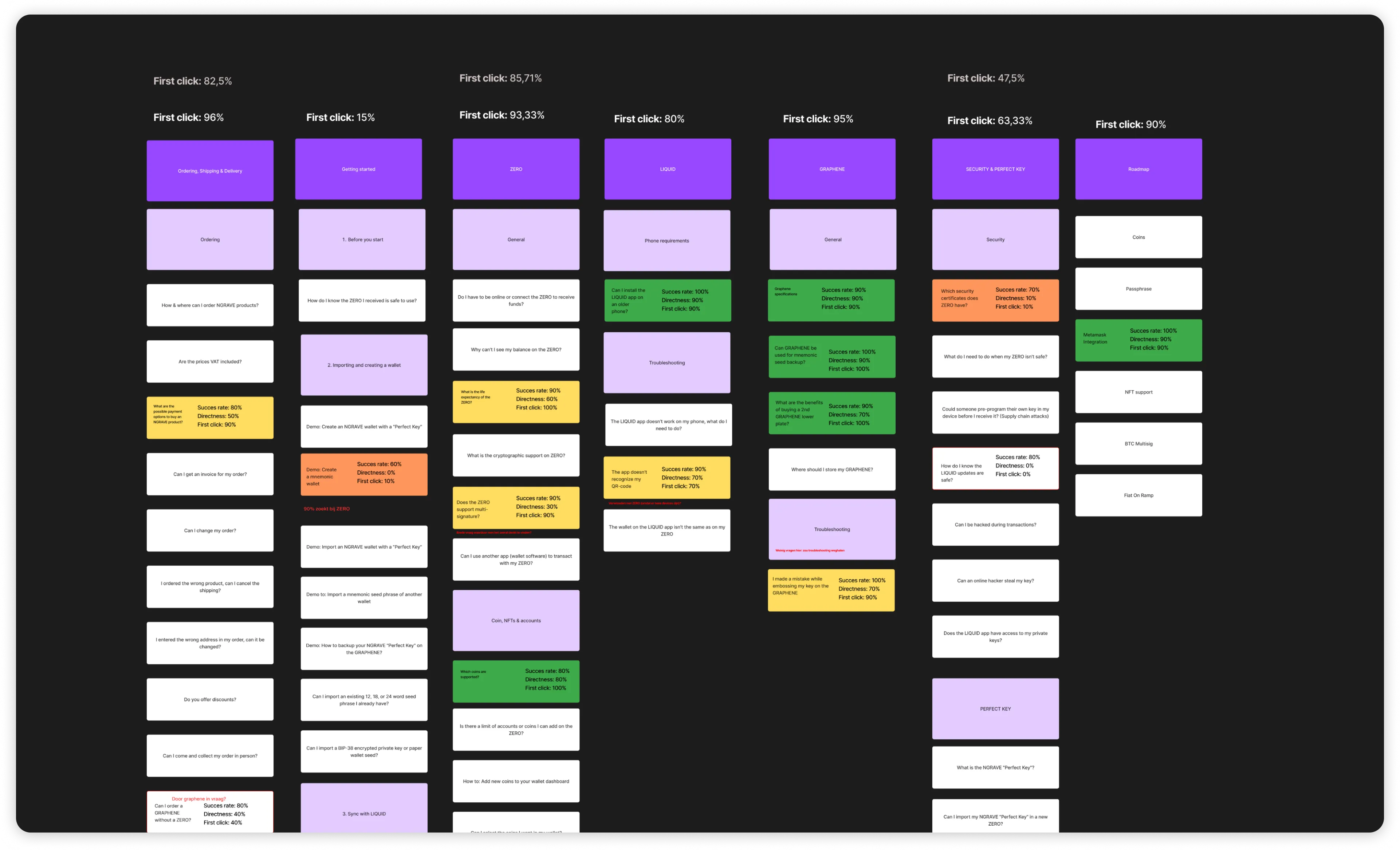
Rather than selecting a structure based on opinion, I validated the two strongest options through Treejack testing.
Participants completed realistic navigation tasks using each proposed structure. One consistently achieved higher success rates and lower completion times, making the decision straightforward.
We Rebuilt the Helpcenter Around How Customers Think.
Not every improvement required a redesign.
Together with Engineering and Customer Support, we prioritised opportunities using a simple effort-versus-impact framework. This allowed us to focus on the largest sources of support demand first while keeping implementation effort low and ensuring we could deliver value quickly.
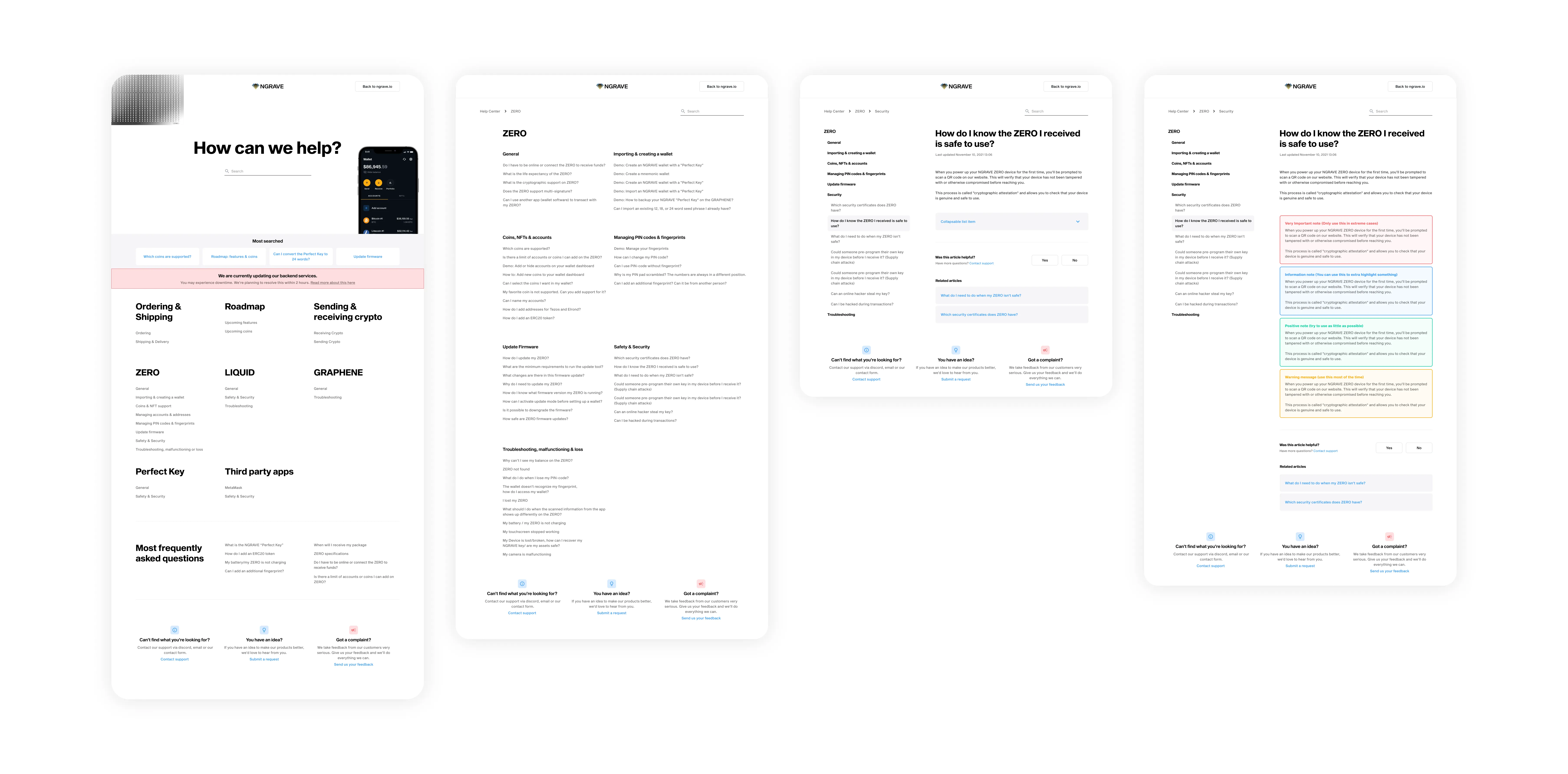
I translated the new customer-task structure into redesigned Helpcenter screens and reusable components that Engineering could implement and Customer Support could use inside Zendesk. Customer Support rebuilt the information architecture around customer tasks using the Treejack results as the foundation, while Engineering surfaced the top four questions directly on the homepage, making the answers to 20% of all tickets visible before users had to navigate anywhere.
I also redesigned the category labels, page hierarchy, and article structure around customer language instead of product terminology, so users could scan faster and reach an answer sooner.
The Structure Changed. The Support Load Dropped.
The redesign delivered measurable improvements across both customer experience and operational efficiency:
- Self-service ratio increased from 5.5:1 to 11:1
- Support tickets decreased by 30%
- Answers responsible for 20% of support demand became immediately accessible from the homepage
The project reinforced an important lesson: customers rarely struggle because information doesn’t exist. More often, they struggle because systems are organised around how companies think rather than how customers think.
By improving findability rather than creating new content, we reduced support demand and delivered measurable business impact.